Showing posts with label Radio. Show all posts

Monday, June 27, 2016

The Radio Experience is Dying

Photo by Daniel Millhouse

With technology advancing leaps and bounds on what seems like a yearly basis, one form of media that used to be considered the coolest of all, radio, is now dying and is unrecognizable compared to what it once was.

It took several decades for radio to hit it's peak, but once rock'n'roll gained popularity it seemed like it would never bottom out. Radio represented youthful rebellion to teenagers and college-aged kids.

Elvis.

Jerry Lee Lewis.

Little Richard.

It was the medium that reached out to the kids. They looked forward to listening to the radio to catch the newest hits. This was where radio DJ's gained celebrity status. They were the gatekeepers of "cool" for the youth. Their personalities were big and some DJ's such as Wolfman Jack became just as famous as many of the music artists they were playing.

In the last decade and a half, radio has seen rough times. A combination of new technology, streaming, and the deregulation of media have nearly killed off radio entirely.

With devices such as iPods and smart phones being produced, many people are turning to these devices for their entertainment needs. The rise of the computer hasn't helped either. Computers are now in nearly every household, and can store and play music easier than ever before.

What has hurt radio is the act of streaming. Not necessarily on the small scale it was a decade ago, but the way it is now with Pandora, Spotify, and iHeart radio. With services like this you can simply type in the name of an artist and listen to their music or the music of similar artists. You can do this for free as long as you listen to the occasional advertisement or pay a small amount of money to listen to your music commercial free.

The problem with this is that there are no DJ's. It's robot/computer controlled. The kids are missing out on the personalities that once hosted their favorite music and everything is becoming more generic. The fun is gone.

Also with streaming, you are now just a target to these large companies. A local DJ used to be able to play a local artist who might be performing somewhere nearby and talk about how you could see them if you liked the music. With streaming, you discover the music the corporations tell you to listen to. If you're lucky, you may get to listen to new music from a local artist to you, but most people aren't that lucky. Plus unless the artist advertises with the company, then you won't know where to find them unless you search for them yourself online which most kids don't do while listening to streaming music.

Streaming on the internet didn't initially start off as a bad thing either. Radio stations such as KRock-Echo gained the attention of a million plus listeners a month, remaining commercial free in the process, and having world famous DJ, Scott Free, host the music. He played new artists, independent labels, and songs by artists that were great, but not necessarily their hit songs that the labels picked out for you to listen on mainstream radio. This had the feeling of early rock'n'roll radio in the fifties mixed with new technology. Unfortunately this didn't last long.

Radio lost it's soul. AOL Music, Pandora, and other streaming services ditched DJ's shortly after the United States deregulated media, forcing thousands of DJ's out of work.

When radio deregulated, it was the death knell for DJ's. Many stations would lose their flair, robotizing their on-air play and eventually homogenizing music as a whole. For kids today to discover new music, a major corporation would either have to tell you what to listen to or the kid would have to do some work and find the new artist they don't know exists yet. Most kids won't do the legwork though. They rely on entities such as American Idol and The Voice to tell them who the good, new artists are.

Technology is a good thing. When it advances, it usually improves the quality of humanity's life. Unfortunately radio is one of the casualties and kids will never know again what it's like for radio to become an experience, not just background music while they do their chores or homework.

Saturday, May 7, 2016

New Forms of Media Influence Politics


With the advancement of technology, every President of Presidential candidate that has been ahead of the curve has seen substantial results in their favor if they embrace it before their counterparts do.

FDR embraced radio through his fireside chats. JFK understood how television worked compared to Nixon. Obama embraced a grass roots campaign through the internet.

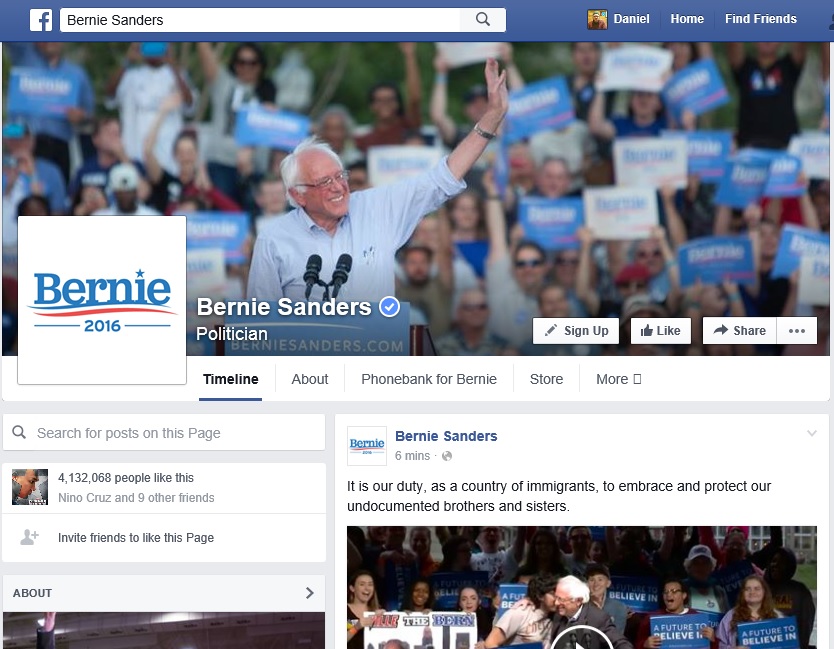
Even the current candidates have turned to a fairly new media...social media. Current Democratic candidate Bernie Sanders rose from a fringe candidate status to a serious contender for nomination, winning many states in the process. Republican candidate Donald Trump has turned to Twitter to get his message out and gain followers in the process.

Whenever a new medium is released it quickly catches the attention of the American public. The youth are the largest group to jump on new media forms. This is often a key demographic that a political party hopes to capture because not only do they represent a significant portion of the present day voters, but they also represent the future of their political parties for years to come.

At a time of uncertainty, FDR used the 30 fireside chats on radio to promote the Emergency Banking Act in response to the banking crisis, to talk about the recession, New Deal initiatives, and update Americans on our stance during World War II. These radio addresses kept America as calm as possible during one of the darkest times in our history.

How did this work in FDR's favor? He became the only President to serve more than two terms (elected four times), destroying Hoover, Landon, Willkie, and Dewey in the national elections.


Later television would capture America. This worked in the favor of John Kennedy who participated in the very first televised presidential debate against then Vice President Richard Nixon.

Those who watched the debates on television saw a young, handsome looking man who exuded the appearance of confidence. On the other side of the stage they saw Richard Nixon who was rumored to be sick, was noticeably sweating on air, refused to wear makeup, and sported a five o'clock shadow. Nixon was considered the better debater and those who listened to the first debate on the radio thought he won. Those who caught the debate on TV though felt the opposite was true.

Nixon had a slim lead in the polls at the time of the debate, but that was the last time he was considered to be the front runner.

The result of the debate was that presidential staffs learned that they had to strategize on how their candidate and their message would appear on television. Teams of people actually focused on how the President looked now when they appeared in public.

By 2008, Democratic presidential candidate Barack Obama adapted his campaign to reach those on the internet. Using his website as well as other websites that were created in support of his campaign, Obama was able to reach a youth vote out there without spending a ton of money. His grassroots campaign was something unseen before as Republican candidate John McCain used traditional outlets of media such as television and radio to reach his base. Social media was still growing at the time and the majority of Americans weren't using it yet. Those who were also got to see the early signs of what it could do.

This year, two candidates have not only utilized social media...they've dominated in it.

Democratic candidate Bernie Sanders was considered a fringe candidate at the time he announced his candidacy. At the time he entered the race, he was only polling at 2 to 5 percent of the total Democratic votes. Hillary Clinton wagered her campaign on name recognition and the use of news media. Sanders on the other hand put together one of the best social media campaigns every seen in politics and rose up to be a serious challenger to the presumed nominee.

Sanders' Facebook followers went from several thousand to over 4 million. His posts on Facebook and Twitter have earned thousands of shares and retweets. At the time of this posting (May 7), Clinton is beating Sanders by over two hundred delegates and has won 26 states to his 19. Though Sanders is behind, his results are not bad for someone considered a far-shot. In fact for those under 40 years old, he is considered the favorite. His message has also been mostly adapted by Clinton to prevent him from rising farther in the polls.

On the Republican side, Donald Trump understood the power of social media better than his other opponents. Ted Cruz's social media campaign was weak. Marco Rubio's made him come across as boring compared to the youthful and energetic image he was hoping to maintain. Jeb Bush's social media presence was abysmal. John Kasich's social media presence seems to be ghostly as his posts are rarely shared compared to the other candidates.

Trump touched on a the theory that "all press is good press". Often appearing to go "nutty" on Twitter in the late hours, Trump comes off no different than some of those online looking to pick fights with other strangers. He tweeted ugly images of his opponents and their family. He retweeted quotes and endorsements from those who come off as being racist or fascist. He often airs out his opinions without his campaign staff getting a chance to chime in on whether the Tweet should go be tweeted.

Even with that said, he still continues to gain more followers, many of whom feel anger towards what they consider as dirty politics ironically.

But one thing can be said about his social media use...he knows how to gain more supporters using it. Trump understands that social media can be a major factor in gaining supporters and getting his message out there, just as Berne Sanders does.

On the flipside, social media can also tear down a candidate. Democrat Anthony Weiner is a prime example of this.

Perhaps one of the brightest Democrats when it came to policies and strategy, he was about as dumb as a horny teenager when it came to social media. On his Twitter account, he tweeted pictures of his genital area on the internet. Perhaps he didn't realize that this would be seen by the world, but that's not an excuse. His actions knocked him out from probably being a future presidential candidate to someone who could no longer even when a race for mayor of New York City, especially when he was caught again being stupid on social media during his mayoral campaign.

As technology continues to develop it should be interesting on what new form of media will develop and then in turn be used by politicians to help further their careers. Maybe some form of virtual reality will be used to transport people in their homes to feel like they're standing by a candidate on stage as they give a speech.

Whatever new form of media develops, it's almost a guarantee that a future president will use it to win a seat behind the Resolute Desk of the Oval Office.